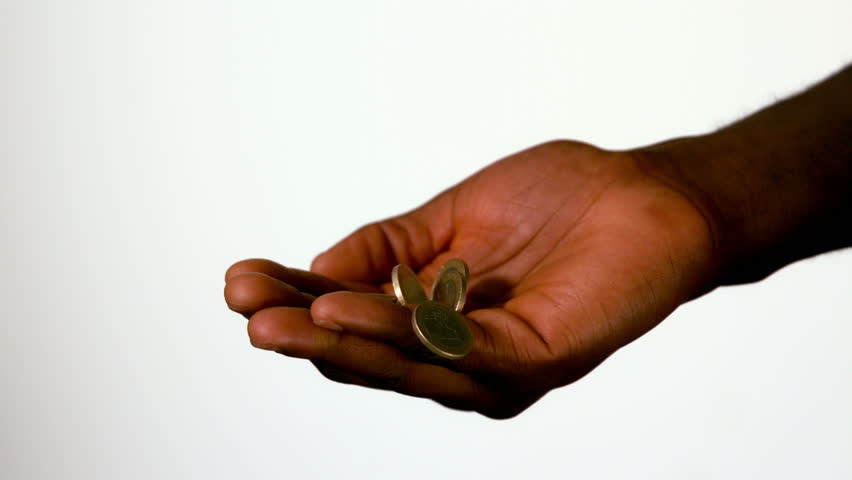
When I think of this novel, the image of a coin comes to mind -- and the idea of its two sides, one opposite the other -- and the act of turning it over in my hand to see first one side, then the other, but never able to see both sides at once. I feel like the characters in this work operate in much the same way. Each character seems to have in various degrees an inability to see the other, understand the other, because none can see themselves. They tell themselves stories, act victim or slave to these stories, but never observe their actions.
Each seeks validation: our acceptance that whatever he or she says about themselves is true. But not necessarily for the reasons they give. We have to ask, is the argument sound? In other words is it historically true? And then charity comes from accepting that each truth told is their own, regardless of our belief in that version to be true.
So enough of my rambling...do you see this playing out in any of our characters? Their relationships with each other? Their belief systems? Their choices? Their strengths and/or weaknesses? You obviously don't need to answer all the above -- just some places you may like to go.

In this day and age, people are often told who they should be and who they are, to the point where people confuse it with their real identities. I think that the confusion in the book is a reflection of real life, and how no one is ever really sure who they are because people are telling them who they should be.
ReplyDelete-Thessalonia Hines
DeleteI do see this search for validation from others in multiple characters in the novel. Multiple characters tell stories to others, seeking for them to agree with what they did and their reasoning, and to understand their reasons for what they did, and see them as right in whatever situation they were in. They however, don't really try to justify their actions by morally deciding if they did the right thing or not in the situation, just that they were right against the other person or people involved and the others were wrong. This is seen through people such as Milkman, Macon Jr., Ruth, Guitar. Milkman does many things that he himself doesn't know if he was in the right or wrong, like hitting his father, and the situation with Hagar, but always cries out to someone such as Guitar to seek validation that it was okay what he did. Macon and Ruth also do this when they tell Milkman their sides of the story with Ruth and her father. Neither of them stop to think if this is really the truth or if it's just their point of view, or if in the end, they were really in the wrong or right; all they do is to seek the validation of Milkman and to have him agree with them over the other person.
ReplyDeleteI do see this search for validation from others in multiple characters in the novel. Multiple characters tell stories to others, seeking for them to agree with what they did and their reasoning, and to understand their reasons for what they did, and see them as right in whatever situation they were in. They however, don't really try to justify their actions by morally deciding if they did the right thing or not in the situation, just that they were right against the other person or people involved and the others were wrong. This is seen through people such as Milkman, Macon Jr., Ruth, Guitar. Milkman does many things that he himself doesn't know if he was in the right or wrong, like hitting his father, and the situation with Hagar, but always cries out to someone such as Guitar to seek validation that it was okay what he did. Macon and Ruth also do this when they tell Milkman their sides of the story with Ruth and her father. Neither of them stop to think if this is really the truth or if it's just their point of view, or if in the end, they were really in the wrong or right; all they do is to seek the validation of Milkman and to have him agree with them over the other person.
ReplyDeleteAlex Dessin
In today's society, people are told who they should be and what they do. For example, parents often tell their children what their career choice should be without the child's input on their selves. In Song of Solomon, Milkman is trying to find his real identity. An example of his identity getting taken away is his name. Milkman gets his name by Freddie observing one of Ruth's breast-feeding sessions. But throughout the book, Milkman finds his true identity without the stereotype, "You are who I say you are."
ReplyDeleteGoing back to your image of a coin, the character that comes to mind immediately is Guitar. Through out the second part of the novel we saw how he had two characters and it would cause him conflict. One side of him was literally a killer, determined to kill white people for revenge and even his own best friend. His other side was a romantic genuine person who just wanted to feel love, the love he never received from neither his parents or anyone. He cared about milkman even as he was trying to kill him. Guitar was a conflicted person with a hatred towards white people that drove him to become someone else and have a split personality.
ReplyDeleteI feel like one of the reasons why I enjoyed this book so much is because Toni Morrison did such a good job making it so that each character felt like a real person. All the characters had so many details and layers to them to the point where my emotions were in sync with them and my thoughts were multiplying with every page I turned. And, the fact that they all had a need for validation gave the characters an even greater link to human nature. Each character in the book had a time where they don’t really think about if what they did was wrong or right. They just look to someone else to double-check their own decisions. I think that’s why when I read the ending of the novel, I didn’t feel sad and my eyes didn’t tear up. I felt content. And that’s what Milkman must’ve felt too⎯content that it was one of the first decisions he didn’t look for any validation on. It was the only decision he could make without a second opinion or a minute of hesitation.
ReplyDeleteI feel like Pilate is an accurate representation of the idea of validation playing throughout the novel. Everyone sees pilate as the strange "negro" who was aloft doing her own thing and just never cared about the opinions of others. But I think it's the contrary, Pilate literally gives up intimacy and the side of physical affection because she didn't have a naval. Not having a naval disqualified her, in her mind, from sharing that moment with someone else. There's a page in the book where the narrator is literally listing all the things Pilate thought men would accept to have sex with over a woman with no naval. Even outside of that, pilate is fighting an internal need to be validated by the spirit of her late father. She carries his bones in her house for years because of the belief that this is what her duty to her father is. I think that that mentality was a testament to how many in the community were still bound to events in history. Sometimes the need for validation wasn't just between people. In Pilate's case it's against spirit almost.
ReplyDeleteWhen we look at Hagar’s character in the novel, specifically her obsession with Milkman, we see her inability to be her own person. Before she meets Milkman, Hagar is described by who she was, what she looked like, and how she acted. However, as soon as she became involved with Milkman, she was only concerned with him. Her character development almost stopped and she became obsessed. When she finally saw herself, literally saw herself in the mirror, she finally was able to develop, even though it eventually led to her death. I think Hagar was unable to see her worth besides in the context of Milkman’s life.
ReplyDeleteFrom what I gathered from the novel, It feels like Macon Jr. and Ruth are both trying to get some from of validation from Milkman. They both tell crazy stories and it leaves the reader and Milkman in a state of confusion and wondering who he can trust
ReplyDelete-Christian Harris
I think that many of the characters in the novel, if not all at some point in time, sought validation from others, which was part of the reason they couldn't "fly". Because their security and identity rested in how others saw them/how they thought others saw them, they were stuck, maybe even "imprisoned", in these negative situations and places and couldn't get out until they stepped out of those situations and saw themselves in a different light. The only two people in the novel that were able to "step out" were Pilate and Milkman, who found their independence and freedom and ability to "fly" once they broke free from the situations they were in (Pilate being rejected because she didn't have a navel, Milkman still living with his parents and staying in that town) and reconciled with themselves in searching for their identity outside of the pressures of their original state. Milkman was able to fly at the end of the novel because he left his hometown and was able to come to terms with himself, including his past and his faults, and redefining himself through who he really was rather than who everyone saw him to be. On the other side, Hagar was unable to fly and eventually died because she was stuck on how she thought Milkman saw her and placed her identity and security on his view of her.
ReplyDelete- Joyce Koo, pd 2
I see this idea in the ways that the characters don't have a good understanding of themselves or others. Milkman goes on a whole journey to try to find the truth about his family's history. He lacks the sense of identity in himself that he tries to find it based on his ancestors. In addition the idea that all characters can only see their own truth leads to the conflict between Guitar and Milkman.
ReplyDeleteMilkman is one of the few characters though who does gain a better idea of his own idea. The journey he goes on helps him understand his faults. He had been very self-centered, but went through a transformation to where he became satisfied with who he was rather than wanting validation from everyone else.
DeleteThese two responses above are Carissa's
DeleteAfter reading the novel, I feel like Macon is seeking validation from Milkman. Macon tells Milkman a bunch of crazy stories, trying to gain his trust. But after taking other characters' stories into account, it only makes Milkman confused as to who he should trust.
ReplyDeleteThe character that first comes to mind when I think of the coin analogy is Guitar. From his own perspective, in the first part of the novel, he is doing the world a service by being in The Seven Days. To everyone else, they just see murder for no reason against innocent people. Guitar is constantly only seeing the world from his own perspective. He is unable to see the consequences of his actions because he is so convinced in his own mind that he is right.
ReplyDeleteI do see the underlying effect of each character having a side to them that is not shown immediately. For people like Ruth, it was not clear at first why she was so infactuated with her father and how that linked to Milkman. Then later on in the book we uncover layer after layer who Ruth really is and how she sees herself - someone who longs to be loved and cared for. As well as Guitar, in the beginning of the story we don't know too much about him. We just observe that hes the opposite of Milkman in the sense that he wants nothing to do with the white community or their influence. Then later on in the book we see how his character becomes one that is crucial in understanding Milkmans development and how his whole life changes. Pd. 5
ReplyDeleteThe person I thought of in relation to the coin prompt was Ruth. It seems to me that she knows that her relationship with her father and with Milkman (as a boy) were abnormal to say the least. However, she unwaveringly defends her actions. It is understandable. People tend to tell themselves what they need to hear in order to stay sane. Ruth of all people would need this coping mechanism. With all the mistreatment and neglect she suffered, it is no wonder she slipped something into Macon's food for a little affection. People do what they need to do in order to satisfy their basic human needs. For Ruth, this meant resorting to trickery, then perversion, then flat out rejection of the idea that she had done anything wrong.
ReplyDeleteThis is Ella Gatlin Pd. 5
DeleteI really enjoyed this book despite all the confusing and sometimes disturbing scenes the development of character was one detail she added that I particularly enjoyed. The flexible and realistic characteristic that all characters share like Ruth and Milkman with their drastic decisions and attitudes. The coin although is in one way or another related to all character reflects Milkman choices the most. From his way of think negatively when He could've looked onto brighter things or deciding to act violently instead of patiently. The different worlds and outcomes that could've led to " the other side of the coin" is the main reason I find myself comparing it to milkman.
ReplyDeleteThere are many relationships in this novel that display the need for validation from one another. One of the relationships is between Milkman and Guitar. Milkman and Guitar become best friends but yet they don't fully understand each other and why they do what they do and why they think what they think. When Milkman goes to the bar with Guitar and hears him and the other men discuss the recent murders of black people done by white people, Milkman doesn't understand his rage. Guitar tries many times to explain to Milkman why he hates white people and why he kills them. Milkman and Guitar don't come to an agreement on what they should do about the unfair prejudice between white people and black people. Guitar was further driven by hatred which took over him when Milkman went on his quest for the gold. Guitar wasn't able to see his wrongdoing in his actions and says he kills because black people, including him are constant victims. Milkman viewed himself as white and was conflicted with his race. He didn't feel like he belonged to either until he discovered his family's history and that was when he began to understand why Guitar had this hatred and did what he did. It was not until Milkman was able to resolve his inner conflict, that he was then able to see the perspectives of others.
ReplyDeleteThere were many relationships in this book where one character would not understand the actions of another. For example, Hagar just did not get the idea that Milkman did not want her. She wanted love and attention so much that she was willing to go to drastic measures to get it; getting a makeover, killing him. She wanted validation from Milkman that he loved her and wanted her. Another relationship was when Guitar was in the Seven Days. Milkman didn't understand why Guitar wanted to kill white people, as he's never seen anything wrong with them. However, Guitar saw it as revenge for killing black people. Coming from Dr. Foster, he was always seeking validation from white people, even becoming racist towards his own race.
ReplyDeleteVickie Tu (Period 2)
There were multiple oppositions in perspective, the more prominent one to me is between Milkman and Guitar. Guitar shared a violent perspective that resembles that of a warped vigilante, believing what he is doing will assert justice. However, Milkman has a more pacifist perspective that can't completely wrap around this ideal, questioning Guitar multiple times. In the end, they share a passive-aggressive relationship in acknowledgement of being former friends, but now fiends who now share a more violent association.
ReplyDeleteI feel like the idea of gaining validation is shown throughout all the characters in the novel, some more than others of course, but every character has done something either unusual or bad, and has tried to sort of converse with another character to try to make that action seem normal. Going back to the idea of the flipping of the coin, I think it resembles a lot of Milkman as a growing human because in the beginning of the novel we see him as an apathetic, selfish person mostly because of his environment. This is a presentation of one side of a coin. Then at the end of the novel we see Milkman sort of switch into this new person, initially being triggered by an unfamiliar setting, and turning into the other side of the coin. We seem him as compassionate, and empathetic as he evaluates his privilege. When I think of the idea that one can't see themselves because you can't see both sides of a coin, I imagine how Milkman eventually does see himself, and imagine holding a coin in front of a mirror, and being able to finally see both sides of it. I see Milkman finding faith and understanding in himself, especially when he let go when Guitar tried to kill him with the wire.
ReplyDeleteRuth is the obvious relationship with the coin prompt, having a side to them that is not shown immediately. She knew what she was doing when she was having kinda a relationship with her father which linked to her son Milkman, which was definetly not normal. We get to know who she is and uncover things about her. Another person is Guitar, at the first part of the novel he thought he was helping the world, doing the world by being in The Seven Days, but others thought he was murdering innocent people.
ReplyDeleteCirce's actions may have made sense to her, but I still found them contradictory. And Ruth's actions make even less sense. Her refusal to leave Macon coupled with her desire for real love contradict. Another example could be Corinthians. Her upbringing and her mother convincing her that she was high-class sabotaged her search for status and love, ultimately leading her to enter a relationship with a member of the Seven Days.
ReplyDeleteLogan Delavan-Hoover
DeleteAmera Mohamed 5: Going off of your coin analogy, I think that that was the reason why Morrison decided to make it clear when part one became part 2. The words took up half the page to let us readers know that the person before in part one will change in a drastic way. Especially with Milkman being the main character you can see how his ignorance towards issues that his other siblings had to go through turned into his understanding of those issues. As for his younger sister you can see how she does from a character that has been quiet and honestly ignored switches into an empowered woman that stands up for herself. It took her years to do it but she told Milkman how she really felt about his ignorance of the struggles he puts other through. As for Guitar he went from one of Milkmans friends to the man who killed Milkmans aunt at an attempt to kill him. Guitar became radicalized by the seven days and he developed new beliefs that he didn’t have in the beginning of the book.
ReplyDeleteI think that the split of the book into two parts really shows in that coin analogy. The Milkman from part one is almost completely unrecognizable, personality wise, to the Milkman at the end of the story. I also think that Milkman and Guitar really show that idea of two sides of a coin. One is trying to be white and loses part of his identity through that. The other, Guitar, has been ostracized to the point of radicalization and has lost who is was before. As Milkman grows in moral and spiritual maturity, Guitar becomes even more radical and unreachable.
ReplyDelete-Katie Brockmeyer
I always like to remember that there are three sides to a coin: both faces and an edge. Parallel to the prompt then, you can see one or two sides, but never three; you can live and experience one side, understand another, yet be completely blind to the third. Guitar is a perfect example of that. His radicalized beliefs on race are the heads-- his world, his truth, his experience-- while the type of life his hardworking African American community members live are simply the edge of the coin: the part he solely comprehends. But the white life-- the wealthy, privileged, classism that is also present in Milkman-- is Guitar's tail. He has no respect, no understanding, and no desire to accept such people.
ReplyDeleteSo I guess in a more basic sense Guitar and Milkman are two sides to the same coin.
-Joel Zinkievich
Hagar is the character that comes to mind. In the beginning, Morrison was writing about Hagar and solely Hagar not what Hagar was like when she was with Milkman. When Hagar was in that relationship with Milkman we didn't see much of her anymore, it's almost as if her life just solely became about Milkman. and when she did become all about Milkman we saw her crazy side where she's trying to kill the man.
ReplyDeleteIn this novel, it's true that there are many characters that tell themselves stories, act victim or slave to these stories, but never observe their actions yet the most prominent one that comes to mind is Guitar. Guitar was a troublesome and tricky character to say the least. We didn't see his much in his childhood or in the early stages of his and Milkman's relationship but it was very evident that near the end he sought validation and acceptance that whatever he said about racial discrimination is true. He had this notion that whites deserved to die and formed the group 7 days to ensure that anyone who could take a black life was punished with the same re precautions. He is hypocritical however because this a group going out and doing exactly what they seek to end in the black community and even in the end, Guitar turns on Milkman and attempts to kill him for essentially not viewing the world in the same manner he did.
ReplyDelete(pd 5)
For me, one of the most obvious ones was the whole book itself, when it quite literally shifted from part 1 to part 2. The paragraph about Hansel and Gretel kind of acted like a transition into the part of the book where we would be seeing the characters, specifically Milkman, act with with more sense and maturity.
ReplyDeleteI think the sense of validation is not simply something that is just explored in the novel but is also a gargantuan part of the human condition. The majority of people don’t want to be an outcast and don’t want to feel as if they are not accepted by others. Milkman desired his father’s validation and it drove him down a path of degradation and greed. The minute that Milkman began to make his own decisions and look for what he wanted, he was at his happiest and was able to genuinely fulfilled. I think when people look for validation in others, it is simply a window into their insecurity of societal isolation. This causes so many people to lose sight of what makes them unique and how they can embrace who they truly want to be and how they want to become that person. Once Milkman had gotten what HE wanted, he was fulfilled in a way that his father’s acceptance wouldn’t have sufficed.
ReplyDeleteI think the most oblivious one is Milkman and Guitar. They both wanted Pilate’s gold for their own reasons. Milkman initially wanted it for materialistic reasons but as his journey went on he didn’t really want it for that reason but instead for spiritual reasons such as finding out about himself through his ancestors. As for guitar he just wanted the gold and eventually led to their conflict.
ReplyDelete-Jie Chen p2
ok this is the third time i've typed this. you mentioned how all the characters only see the people and situations around them on only one side of the coin, and always try to validate their ideas with any information they come upon, because they cannot are both side of their own coin. I think this is really true with Milkman, Hagar, and Macon. Milkman finds any information possible to justify his feelings toward his parents and Hagar, and won’t believe otherwise. It’s only until he sees both sides of his own coin (revelations) that he begins to understand the others in his life completely. Hagar refuses to see any reality besides the idea that the makeup and clothes with bring her love again, despite the truth. Macon also does this with his wife and the gold, as he only believed the idea he had, and used any information he had to validate it. All in all I think these characters are pretty small minded.
ReplyDeleteThe novel creates each character to impact the story really well. Milkman spent his journey seeking to find his identity as well as validation. Over his journey in the novel, Milkman completely changes and is almost unrecognizable from the person he was in part one. In addition to his character change, Milkman was also able to find his identity; he had to find it for himself.
ReplyDeleteYes, most of the characters in the novel do seek validation and if they know their actions wont be accepted, they might try to hide it, like Ruth did when her father died and breastfeeding Milkman past the usual age.
ReplyDeleteMilkman's loves Pilate and he likes her free-spirited nature, but we also know that Macon Dead Jr. dislikes what his sister stands for, her lifestyle and her clothing style. As a person, she would never be able to appeal to either side so she has found comfort in the fact that she has to be herself.
Milkman would never want to see the side of himself where he was wrong. Therefore he would get angry, get drunk and other stuff. When He was able to finally manage to balance that coin of his past and present, was he truly able to learn about being himself while being considerate of others.
-Keyli Portillo
Yes, much like Milkman, a coin is two sided. Milkman took the entire length of the book to progress spiritually and emotionally because it took a certain turn of events, Pilate smashing his head in after his lack of empathy for Hagar's death, Pilate dying in his arms after burying her father's bones. These events were sort of the "flipping of the coin" from one side to the next as Milkman transitioned from a little boy to a mature man.
ReplyDeleteThroughout the book, I believe there is a difference between what each character desires and what they actually do for the purpose of keeping face. Ruth has a desire to escape her dead relationship with Macon but must keep the image of a loyal wife as she is expected. Macon has a deep shame for Pilate and spends a lot of effort to keep her away from his life so that he is not thought less of. Milkman spends almost his whole life meeting the expectations of others but hardly acting on his own desires. One side of the coin is the side that they want to present - the proper and etiquette-wise side - but they all wish to hide the side that holds their true thoughts and desires.
ReplyDelete- Marcos M.
Julia Bentley
ReplyDeleteYes, I do see this playing out in the characters, and it was one of the main reasons that I enjoyed the novel. The “different sides” the characters had made them feel real to me. One of my pet peeves as a reader is when a novel has characters that come across as very basic and one dimensional. It’s interesting being able to learn about a character’s different sides, or watch them develop over the course of time. It gives the story a much more authentic feel, since people do have basic, unchanging qualities in real life. I think the character that represents this most accurately is Milkman. If you compare him at the beginning of the novel to him at the end of the novel, there is an extreme difference. He grows due to the things that happened to him and has more of an actual character than just the things he adopted from his father. He was able to have another side than just his materialistic and self-centered, and gains new perspective and focus.